
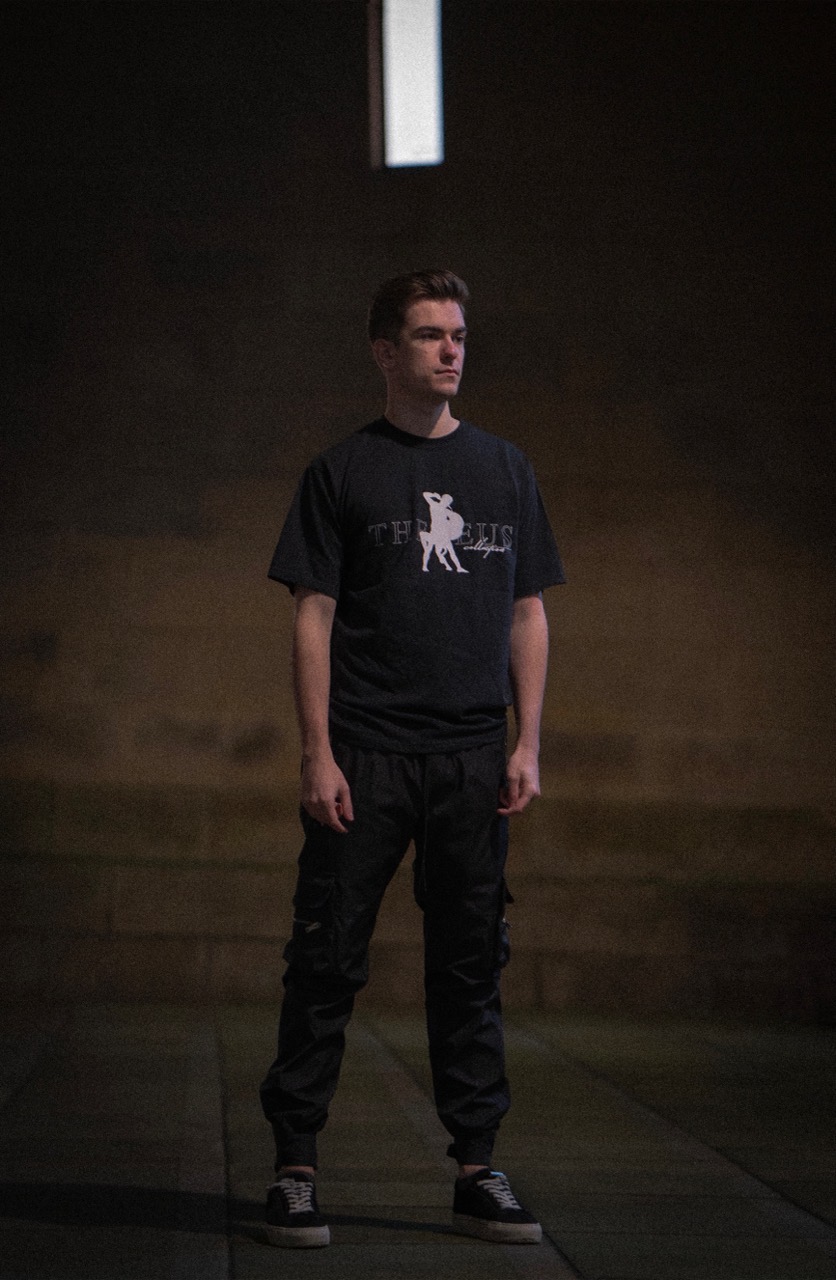
Streetwear Basics: A Guide to Building a Wardrobe

Streetwear has a reputation problem it doesn’t really deserve anymore. For a lot of men, the word still conjures up an image of hype-chasing, resale flipping, and outfits built entirely around whichever logo is trending that month. That version of streetwear is real, but it’s not the whole picture, and it’s not the version that actually holds up over time.
The version that matters is quieter than that. It’s a wardrobe category built the same way any other one is: around fit, versatility, and pieces that mean something to the person wearing them rather than pieces chosen because everyone else is wearing them too. Treated that way, streetwear isn’t a trend to age out of. It’s a legitimate, durable part of a man’s wardrobe, one that sits comfortably alongside the rest of your clothes instead of feeling separate from them.
This guide covers what that actually looks like in practice: the pieces worth owning, how to get the fit right, how to style the tees and jackets that make up the core of it, and why the way you shop for streetwear, mass-produced versus genuinely limited, changes what you get out of wearing it. If you haven’t already, it’s worth reading the complete guide to dressing as a man in 2026 first, since this picks up right where the wardrobe section of that guide leaves off. And if personal style is more what you’re after, the style and confidence guide covers the identity side of all this in more depth.
The core pieces every streetwear wardrobe needs
Every streetwear wardrobe, no matter how someone wears it day to day, comes back to a short list of pieces that do most of the actual work.
A few well-made graphic tees, chosen for how well they pair with the rest of what you own rather than for a single loud print. One solid outer layer, a jacket or hoodie that can be thrown over almost anything. A pair of denim or joggers that actually fit through the leg instead of drowning you. And one clean, versatile pair of sneakers that doesn’t try to do too much on its own.
That’s the foundation, and it’s a short one on purpose. The instinct a lot of men have when getting into streetwear is to buy wide, picking up whatever’s dropping that week until the wardrobe is full of pieces that only really work in isolation. The better approach, and the one that actually produces more usable outfits, is to buy narrow and deep: fewer pieces, chosen because they combine well with several other things you already own.
[IMAGE: A neatly arranged flat lay of the four core pieces described above, tee, jacket, denim or joggers, sneakers, laid out separately to visually reinforce the “short list” concept.]
If this is where you’re starting from, the capsule wardrobe guide goes much deeper into exactly how to build this out on a real budget, including which pieces to prioritize first.
Getting the fit right in streetwear
Fit is the single biggest lever in streetwear, more than any logo, print, or brand name. It’s also where most of the visible mistakes happen.
The oversized silhouette that’s defined streetwear for years hasn’t gone anywhere, but it’s gotten more deliberate in 2026. The difference between “oversized on purpose” and “wearing the wrong size” comes down to proportion. An oversized tee reads as intentional when it’s paired with something more fitted, slimmer joggers, tapered denim, a tighter outer layer. It reads as accidental when everything in the outfit is loose at once, and the whole silhouette collapses into shapelessness.
A useful rule of thumb: if the top half of your outfit is loose, let the bottom half be more fitted, and vice versa. Balance is what makes an oversized piece look chosen rather than defaulted into.
The most common fit mistake is simply sizing up out of habit rather than because the piece is actually meant to be worn that way. Not every graphic tee is designed to be oversized, and buying two sizes up on a piece cut for a regular fit usually just looks like the wrong size, not like a style choice.
[IMAGE: A close, cropped shot contrasting proportion, such as a loose tee paired with tapered joggers, to visually demonstrate the “balance one loose piece with one fitted piece” rule.]
How to style a graphic tee like it’s not a t-shirt
A graphic tee on its own is just a tee. Styled with intention, it becomes the anchor of an entire outfit.
Layering is the easiest way to elevate one. A graphic tee under an open flannel or unbuttoned shirt, or under a jacket left open just enough to show the print, immediately reads as more considered than the tee worn alone. It also solves the practical problem of graphic tees not always working in cooler weather, since the layer does the temperature work while the tee still shows.
The other lever is what you pair the print with. A bold graphic tee paired with equally busy or patterned bottoms competes with itself and reads as cluttered. Paired with plain, solid-colored bottoms and a plain outer layer, the same tee becomes the clear focal point of the outfit instead of getting lost in visual noise.
Small accessories, a simple chain, a cap, a crossbody bag, can round the look out further, but they should support the tee rather than compete with it for attention.

The full guide to styling graphic tees breaks this down into specific combinations if you want more than the overview here.
Building a streetwear capsule wardrobe on a budget
None of this requires spending a lot of money, but it does require spending it in the right order.
The 80/20 principle applies well here: roughly eighty percent of your wardrobe should be the basics, tees, a jacket, bottoms, footwear, that combine easily with everything else you own. The remaining twenty percent is where statement pieces, bolder prints, or one standout jacket earn their place. Reversing that ratio, mostly statement pieces with only a couple of basics, tends to produce a wardrobe with a lot of pieces and very few actual outfits.
Where you spend more matters too. Outerwear and footwear get worn constantly and are worth the higher price point, since the cost evens out fast over hundreds of wears. Tees and other basics are usually fine to buy at a moderate price point, since they’re easier to replace as they wear out.
The capsule wardrobe guide goes into much more detail on sequencing these purchases, including what to buy first if you’re building a streetwear wardrobe from nothing.
Why limited-edition and numbered pieces matter
There’s a meaningful difference between a piece that’s mass-produced and marketed as exclusive, and a piece that’s genuinely limited, made in a fixed, numbered run that will never be reproduced.
The first kind of scarcity is mostly manufactured. It’s a marketing device layered onto a piece that could, in theory, be restocked indefinitely. The second kind is real, and it changes the relationship between the piece and the person wearing it. A numbered tee that’s one of, say, forty-five ever made carries a different weight than one of several hundred thousand identical units. It’s not about the resale value or the bragging rights. It’s that a genuinely limited piece tends to get worn more deliberately, because it actually is one of a kind rather than one of a printing run.
This is also where a considered, capsule-style wardrobe and limited-edition pieces line up more naturally than people assume. Owning fewer things, chosen carefully, and occasionally including a piece that’s genuinely one of a limited run rather than mass produced, fits the whole philosophy of a thoughtful wardrobe far better than buying in bulk from fast fashion ever does.
The why numbered drops matter guide goes further into how genuinely limited pieces are made, numbered, and released, if you want the full picture.
Streetwear across seasons and occasions
Streetwear doesn’t need to live in its own separate wardrobe, cut off from the rest of your clothes. The same pieces that work for a casual day can adapt to colder weather with the right layering, or dress up slightly for a smart-casual setting with a few small swaps, a cleaner sneaker, a more tailored outer layer.
This is really a bridge into a bigger topic than fits here. The seasonal dressing guide covers the full layering logic and smart-casual formulas that let a streetwear-based wardrobe move across contexts without needing a second, separate closet for “nicer” occasions.
Common streetwear mistakes to avoid
A handful of mistakes show up more than any others, and each one is an easy fix once you know to look for it.
Buying for the logo rather than the fit is the most common. A recognizable brand name on a piece that doesn’t actually fit well will always look worse than an unbranded piece that does.
Overloading an outfit with too many statement pieces at once is a close second. One bold graphic tee, one standout jacket, one distinctive pair of sneakers, that’s usually the ceiling for a single outfit before it starts to compete with itself. Pick one piece to be the focal point and let everything else support it.
Ignoring proportion and balance rounds out the list. As covered above, loose paired with loose collapses a silhouette. Balance is what separates an intentional streetwear look from one that just looks unfinished.
FAQs
Is streetwear appropriate for smart-casual settings? Yes, with the right adjustments. Swapping in cleaner footwear, a more tailored outer layer, or toning down the graphic elements can take a streetwear base into smart-casual territory without losing the core of the outfit.
What makes a streetwear piece “good quality”? Fabric weight, print durability, and construction details like stitching and seam finishing are the real markers, not the brand name attached to the piece.
Do graphic tees still work in 2026? Yes. The way they’re styled has shifted toward layering and pairing with plainer pieces, rather than being worn entirely on their own.
Is streetwear expensive to get into? Not necessarily. A small, well-chosen capsule of core pieces costs less than most men expect, and it’s usually cheaper over time than buying wide and replacing pieces that don’t work with anything else.
Where to go next
This guide covers the full shape of a streetwear wardrobe, but three areas are worth going deeper on. If styling graphic tees is where you want more detail, the styling graphic tees guide has specific combinations to try. If you’re building from scratch on a budget, the capsule wardrobe guide walks through exactly what to buy first. And if the numbered, limited-edition side of streetwear is what caught your attention, the why drops matter guide explains how that actually works.
For the bigger picture beyond streetwear specifically, the complete guide to dressing as a man in 2026 ties this together with personal style and seasonal dressing.


4 Comments