
The Ultimate Meswear Guide: Dressing well as a Man in 2026
This menswear guide deeply discusses dressing well in 2026. And that isn’t about chasing whatever’s trending this month. It’s not about logos, hype drops, or owning fifty pieces you rotate through without ever feeling like yourself in any of them. The men who actually look put together, in real life and not just in a curated grid, have figured out something simpler: fit matters more than the brand on the label, versatility beats novelty, and a wardrobe should say something about who you are rather than who you’re trying to look like.
This menswear guide is the starting point for all of that. It’s detailed because it covers the whole picture, but you don’t need to read it as one sitting. Think of it as a map. We’ll walk through the core wardrobe every man should own, how to actually develop a personal style instead of copying someone else’s, how to dress for the seasons and the moment you’re actually in, the mistakes that quietly sabotage most wardrobes, and how to do all of this without needing an unlimited budget. Each section links out to a deeper guide if you want to go further on any one topic.
What “dressing well” actually means in 2026
The old rulebook, always match your belt to your shoes, never wear more than two colors, one logo per outfit, has mostly fallen away. What’s replaced it is less about rules and more about intention. This menswear guide proves that dressing well now means your clothes fit properly, they work together as a system rather than a pile of individual purchases, and they reflect an actual point of view rather than whatever an algorithm pushed into your feed last week.
That doesn’t mean anything goes. It means the bar has shifted from “did I follow the rules” to “does this actually look like me, and does it hold up.” A perfectly tailored blazer that makes you feel like you’re wearing a costume is worse than a well-fitted tee and jacket combination you’d actually reach for on a random Tuesday.
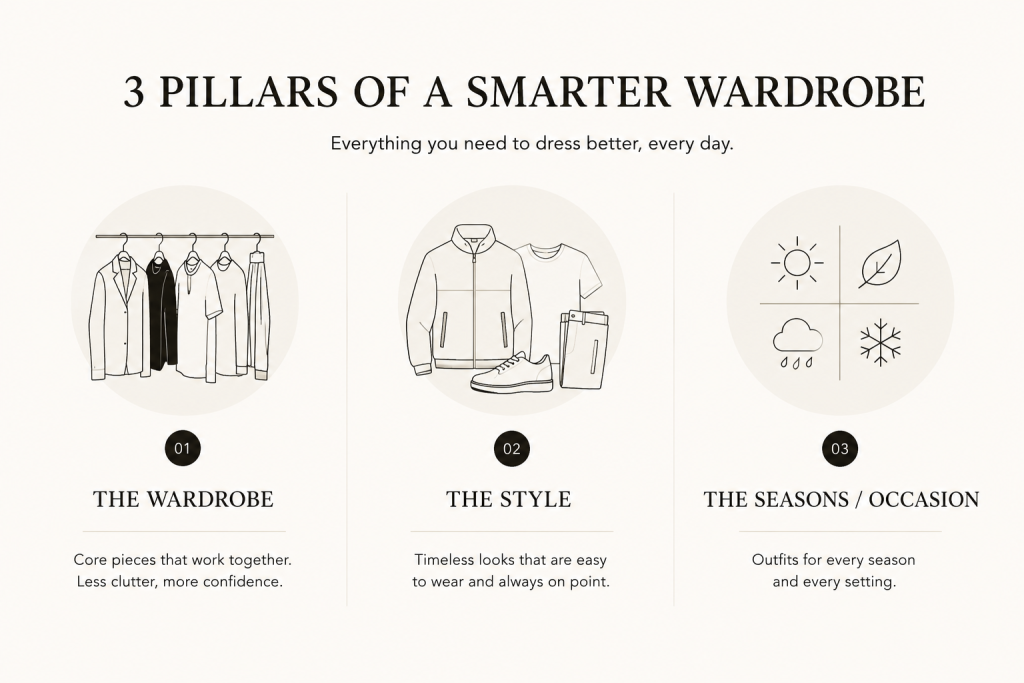
Three things build the whole picture: the core pieces in your wardrobe, the personal style that ties them together, and the ability to adjust what you’re wearing to the season and the occasion. We’ll go through all three, and if you want the long version of any of them, the streetwear basics guide, the style and confidence guide, and the seasonal dressing guide each go much deeper than we can here.
A menswear guide for building your core wardrobe
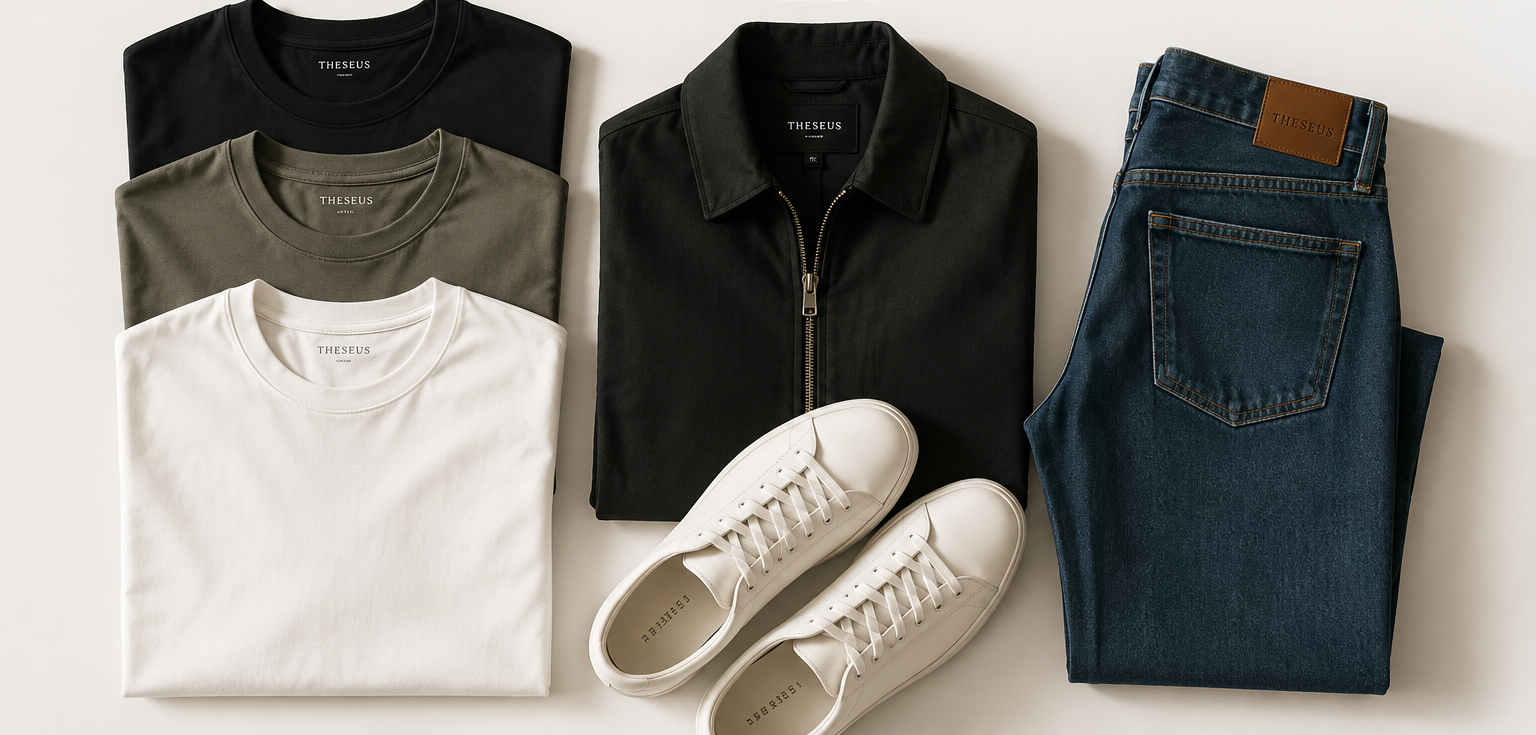
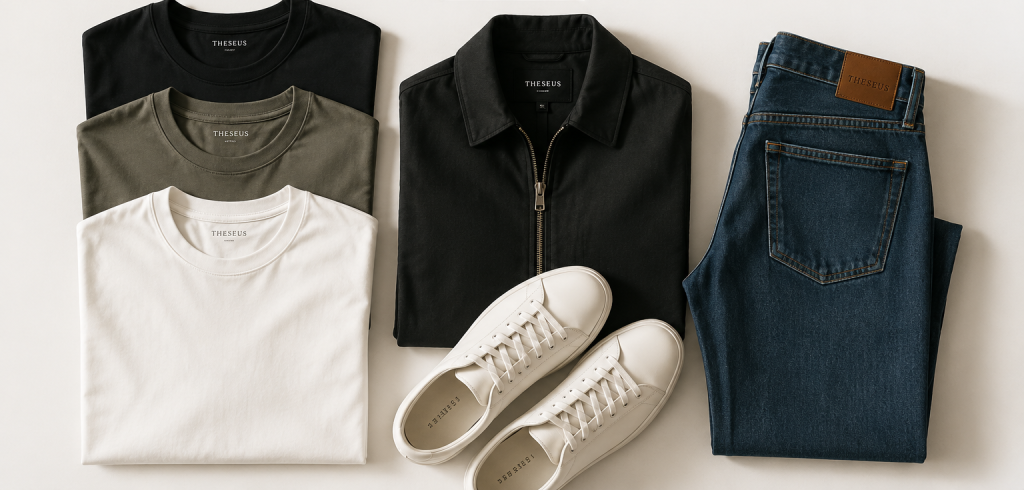
Every wardrobe, no matter how someone dresses day to day, is built on a small set of pieces that do most of the work. For most men in 2026, that list looks something like this: a few well-made tees in colors you’ll actually wear together, one solid pair of denim that fits properly through the leg, an outer layer that works for both warm and cool days, and one pair of clean, versatile footwear that isn’t trying too hard.
That’s it. That’s the foundation. Everything else, the going-out shirt, the statement jacket, the seasonal layer, gets built on top of that base once it exists.
The instinct a lot of men have is to buy more, thinking a bigger wardrobe means more options. In practice, the opposite tends to be true. A smaller wardrobe built from pieces that actually go together gives you more usable outfits than a large one full of things that only work in isolation. Ten pieces that mix and match well can produce dozens of outfits. Thirty pieces that don’t talk to each other produce maybe ten.
This is also where streetwear earns its place, not as a passing trend, but as a legitimate wardrobe category. A well-made graphic tee or a limited run piece isn’t automatically at odds with a “put together” wardrobe. The key is treating it the same way you’d treat any other piece: does it fit, does it work with what else you own, and does it actually feel like you. If you want the deeper breakdown of what belongs in that part of your wardrobe and how to build it out properly, the streetwear basics guide picks up exactly where this leaves off.
Developing a personal style
A wardrobe is the material. Style is what you do with it. This is the part most menswear guides skip past quickly, but it’s arguably the most important piece, because clothes that fit and coordinate can still leave you feeling like you’re wearing someone else’s outfit if there’s no point of view behind them.
Style, in the way that actually matters, is closer to identity than to fashion. It’s the accumulation of small, consistent choices, the colors you gravitate to, the silhouettes that feel right on you, the handful of pieces you reach for without thinking, that eventually become recognizable as yours. That’s not built overnight, and it’s not built by copying an influencer’s exact outfit either. It’s built by paying attention to what you actually feel good in and doing more of that.
There’s a real, practical link between how you dress and how you carry yourself. It’s not mystical. Clothes that fit well and feel like an accurate reflection of who you are tend to make people stand a little straighter and move through a room with less second-guessing. That’s confidence, and it compounds. The inverse is also true: an outfit that doesn’t feel like you, even if it’s technically “correct,” tends to show up in small ways, fidgeting, tugging at a collar, hesitating in front of a mirror.
If you’re trying to actually find your style rather than borrow someone else’s, the fastest path is usually looking backward before looking forward. What have you worn on the days you felt most like yourself? What’s the common thread? That’s usually a better starting point than any trend report. The style and confidence guide goes deep on this, including a practical framework for narrowing down your own signature style instead of guessing at it.
Dressing for the seasons and the occasion
The third piece of the puzzle is knowing how to adapt what you own to where you’re actually going and what the weather’s actually doing. This is where a lot of otherwise well-dressed men fall down, not because they own the wrong things, but because they never learned how to shift their existing wardrobe across contexts.
Layering is the backbone of seasonal dressing, and it’s simpler than it sounds. The logic is just: a base layer that manages temperature against your skin, a mid layer that adds warmth without bulk, and an outer layer that handles wind, rain, or cold. Once you think of your wardrobe in those three functional categories instead of as individual pieces, dressing for changing weather stops being a guessing game.
Smart-casual is the other skill worth building, and it might be the single most useful thing missing from most men’s wardrobes. It’s the ability to dress up a casual base, a good tee, well-fitted trousers, clean sneakers, just enough to walk into a slightly more polished setting without looking like you tried too hard or, worse, like you didn’t try at all. Once you have it, it solves a huge percentage of “what do I wear” moments: dinner, a date, a casual work event, meeting someone’s parents for the first time.
Then there’s the day-to-day shifting: gym to street, street to a night out, weekday to weekend. The goal isn’t to own a separate wardrobe for each of these. It’s to own pieces flexible enough to move between them with one or two small swaps. The seasonal menswear guide breaks all of this down further, including specific layering combinations and smart-casual formulas you can copy directly.
Common mistakes men make with their wardrobe
A few patterns show up again and again, and most of them are easy to fix once you can name them.
The first is buying trend pieces with no versatility. A single loud statement piece that only works with one very specific outfit ends up sitting in the closet unworn within a couple of months. It’s not that trend pieces are bad, it’s that they should be the exception in a wardrobe, not the foundation.
The second is ignoring fit. This is the single highest-leverage change most men can make, and it costs nothing. A ten-dollar tee that fits properly will always look better than an expensive piece that’s the wrong size. Fit affects everything: how the fabric drapes, how proportions read, whether you look like you’re wearing the clothes or being worn by them.
The third is over-relying on logos and brand names as a substitute for an actual point of view. There’s nothing wrong with wearing recognizable brands, but a wardrobe built entirely around “which logo is this” rather than “does this actually work for me” tends to feel hollow, and it usually shows.
How to build a 2026 wardrobe on any budget
None of this requires an unlimited budget. It requires a shift in how you spend the budget you have.
The capsule wardrobe logic works at almost any price point: fewer pieces, chosen for how well they combine with everything else you own, beats a larger pile of unrelated purchases. Before buying anything new, it’s worth asking whether it works with at least two or three things you already own. If it doesn’t, it’s probably not worth the money no matter how good it looks on the hanger.
Where you spend and where you save matters too. It’s usually worth spending more on the pieces you’ll wear constantly, outerwear, footwear, denim, since cost per wear evens out fast on things you reach for every week. It’s usually fine to spend less on pieces that are more seasonal or occasional.
This is also where considered, limited pieces earn a place in a wardrobe rather than working against it. A numbered, limited-edition piece isn’t automatically at odds with a thoughtful, capsule-style wardrobe. If anything, owning fewer things but choosing them deliberately, including the occasional piece that’s genuinely one of a limited run rather than mass produced, fits the whole philosophy of this menswear guide better than buying in bulk from fast fashion ever will.
FAQs
What should every man have in his wardrobe? At minimum: a few well-fitted tees, one pair of properly fitting denim, an outer layer that works across seasons, and one clean, versatile pair of shoes. Everything else builds outward from that base.
How many outfits does a man actually need? Fewer than most people think. A tightly built capsule wardrobe of ten to fifteen pieces that all work together can produce several weeks’ worth of distinct outfits.
Is streetwear still in style in 2026? Yes, though the framing has shifted from hype-driven trend chasing toward considered, well-made pieces, including limited or numbered releases, treated as legitimate parts of a wardrobe rather than novelty purchases.
How do I find my personal style if I don’t already have one? Start by looking at what you’ve already worn on days you felt most like yourself, rather than trying to copy someone else’s look from scratch. The pattern that emerges is usually a better guide than any trend report.
Do I need a different wardrobe for winter and summer? Not entirely. Building your wardrobe around layering, rather than season-specific pieces, means most of your base wardrobe carries across the year with a few swapped layers.
What’s the biggest mistake men make when dressing? Ignoring fit. It’s the cheapest fix and the one with the biggest visible impact.
Where to go next
This menswear guide covers the full picture, but each section here is a doorway into something deeper. If the core wardrobe section resonated most, the streetwear basics guide goes much further into building that out properly. If it was the style and identity section, the style and confidence guide has a full framework for narrowing down what actually works for you. And if you’re mainly trying to solve the “what do I wear today” problem, the seasonal dressing guide has the specific layering and smart-casual combinations to make that easier.
Dressing well in 2026 isn’t complicated once you strip away the noise. Get the fit right, build fewer pieces that actually work together, and let your style be an honest reflection of who you are rather than a copy of someone else’s. Everything else is just details.



2 Comments