What Is the Ship of Theseus? The Paradox Explained
A ship that came home different from the one that left.
The Ship of Theseus is one of philosophy’s oldest puzzles about identity. It asks a simple question with no clean answer. If you replace every part of something, piece by piece, is it still the same thing, or has it quietly become something new?
The Myth Behind the Ship
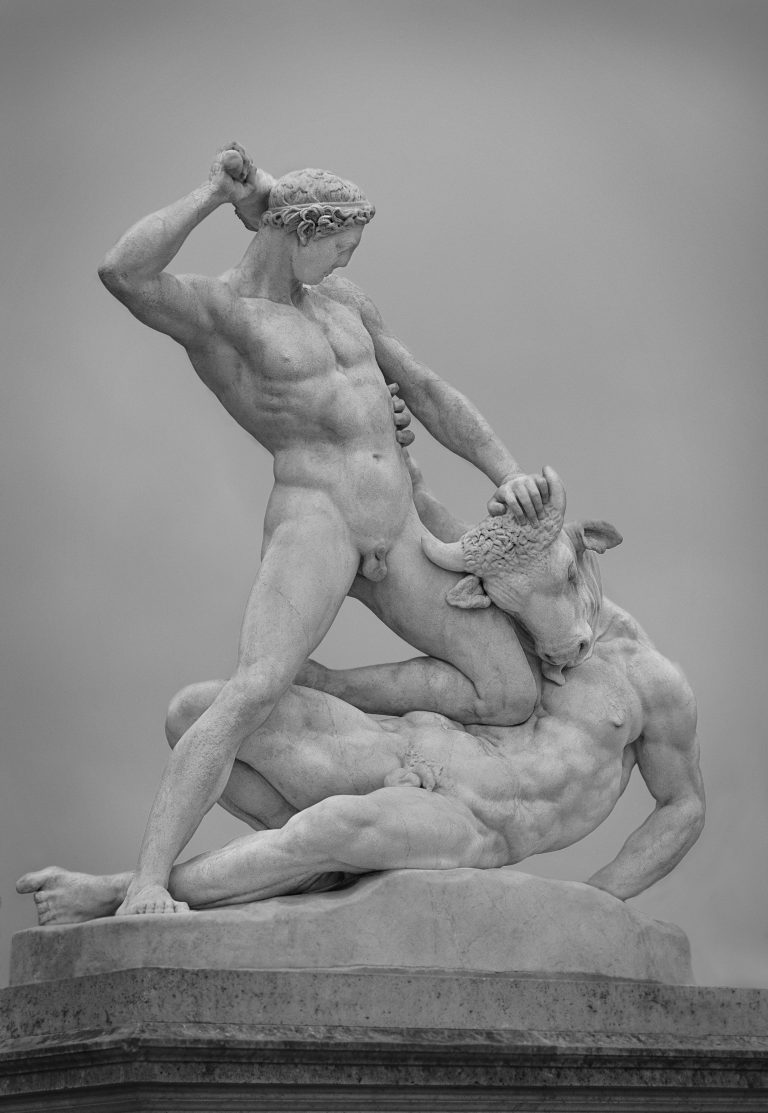
The story starts with Theseus himself. As a young man, he volunteered to sail from Athens to Crete as one of the tributes sent to face the Minotaur, a creature kept inside a maze called the Labyrinth. He killed the Minotaur, escaped the maze with Ariadne’s help, and sailed home a hero.
The ship he sailed on became famous because of what he did aboard it. Once he returned, the Athenians did not scrap the vessel. They kept it moored in the harbour as a monument, a physical reminder of the voyage and everything it represented.
Wood does not last forever, especially wood sitting in salt water. Over the years, planks began to rot. So the Athenians repaired the ship as needed, replacing a plank here, a beam there, whenever the old timber gave out. This went on for so long that, eventually, not one original plank remained. Every part of the ship had been swapped at least once.
The Question Plutarch Asked
A Greek writer named Plutarch recorded the debate this raised among philosophers of his time. Some argued the ship was still the same ship. It had never once stopped existing or stopped being used. It had simply been maintained, the same way any long-lived object needs upkeep.
Others disagreed completely. If every single plank was new, they said, nothing physical actually connected this ship to the one Theseus sailed home on. Calling it the same ship was just a habit of language, a name people kept using out of convenience, not a statement of fact.
Neither side could fully win the argument, and that is exactly what makes it a paradox rather than a simple question. Both positions feel true. Both positions feel wrong. There isn’t a piece of missing information that would settle it either way.
Descriptive Sameness Versus Actual Sameness
Philosophers eventually split this into two separate ideas, because the original question was hiding two different meanings of “same” inside one word.
The first is descriptive sameness. The repaired ship looks the same, serves the same purpose, and carries the same name. In that sense, nothing has changed at all.
The second is numerical sameness, meaning it is literally, physically the one and only original object. By that stricter standard, the ship failed the test the moment the first plank was swapped out, long before all of them were gone.
Most disagreements about the Ship of Theseus come down to which of these two people are actually arguing about, often without realising it.
What the Philosophers Said
Different thinkers took different sides, and their positions still shape how people talk about identity and change today.
Heraclitus believed everything is in constant motion, so nothing ever fully holds still, not even for a moment. By his logic, the ship was never fixed to begin with, plank replacement or not. Identity, to him, was always an illusion laid over constant change.
Aristotle looked at it from a different angle entirely. He cared about function and purpose rather than material. The ship still floated. It still served the role Theseus gave it. That continuity of purpose mattered more to him than which specific atoms made it up.
John Locke, writing centuries later, argued that identity is really built from memory and unbroken experience, not physical matter at all. Applied to the ship, what matters is the continuous line of use and history behind it, the fact that it was never abandoned or forgotten between one plank and the next.
Hobbes and the Second Ship
Thomas Hobbes made the puzzle considerably harder. He asked what would happen if someone collected every old plank as it was removed, kept them safe, and eventually used them to rebuild a second ship from scratch.
Now there are two ships sitting in front of you. One has been continuously repaired, still sails, and still carries the name Theseus gave it. The other is built entirely from the original material, every plank authentic, but assembled only now, after decades sitting in storage.
Which one is the real Ship of Theseus? Both have a genuine claim. Neither claim is complete on its own. Hobbes never supplied a tidy answer, because logic alone cannot settle which kind of sameness should win, continuity of use or continuity of matter.
The Ship Inside Every Person
This is the reason the puzzle has outlived actual wooden ships by over two thousand years. It was never really about timber and nails. It is about anything that changes slowly while still being called the same thing throughout.
The clearest modern example is the human body. Cells die constantly and are replaced by new ones, at different rates depending on the tissue. Most of the body a person has today shares almost no physical material with the body they had a decade ago. And yet everyone, including the person themselves, still uses the same name, the same sense of self, without a second thought.
The same pattern shows up everywhere once you start looking for it. A football club can lose every player and manager it once had, and supporters will still call it the same club. A company can replace its entire workforce over a few decades and still be described as one continuous business. A restored building can have every original stone swapped for a replica, and visitors will still call it the original.
Why the Paradox Still Matters
The Ship of Theseus does not hand you an answer, and that is precisely why it has lasted. It hands you a mirror instead. It asks you to notice how much can change inside something, a ship, a body, an institution, a person, while a name and a sense of continuity carry it forward regardless.
Whether continuity or material matters more probably depends on what you’re actually asking about. What the paradox proves beyond doubt is that identity is far less solid than it feels from the inside.
Questions about the Ship of Theseus
What is the Ship of Theseus paradox?
It is a thought experiment about identity and change. If every part of an object is replaced over time, the question is whether it remains the same object or becomes something new.
Where does the Ship of Theseus story come from?
It comes from the Greek writer Plutarch, who described the Athenians repairing Theseus’s ship plank by plank after his voyage, until none of the original wood remained.
What is the answer to the Ship of Theseus paradox?
There isn’t a single agreed answer. Philosophers have argued different positions for over two thousand years, based on matter, purpose, and memory, and the debate remains open today.
What is the Thomas Hobbes version of the Ship of Theseus?
Hobbes added a twist by imagining the discarded original planks being collected and rebuilt into a second ship, creating two competing claims to the same identity at once.
What is the point of the Ship of Theseus paradox?
It uses a ship to ask a bigger question about identity in general, challenging the idea that something has to stay physically unchanged in order to remain itself.