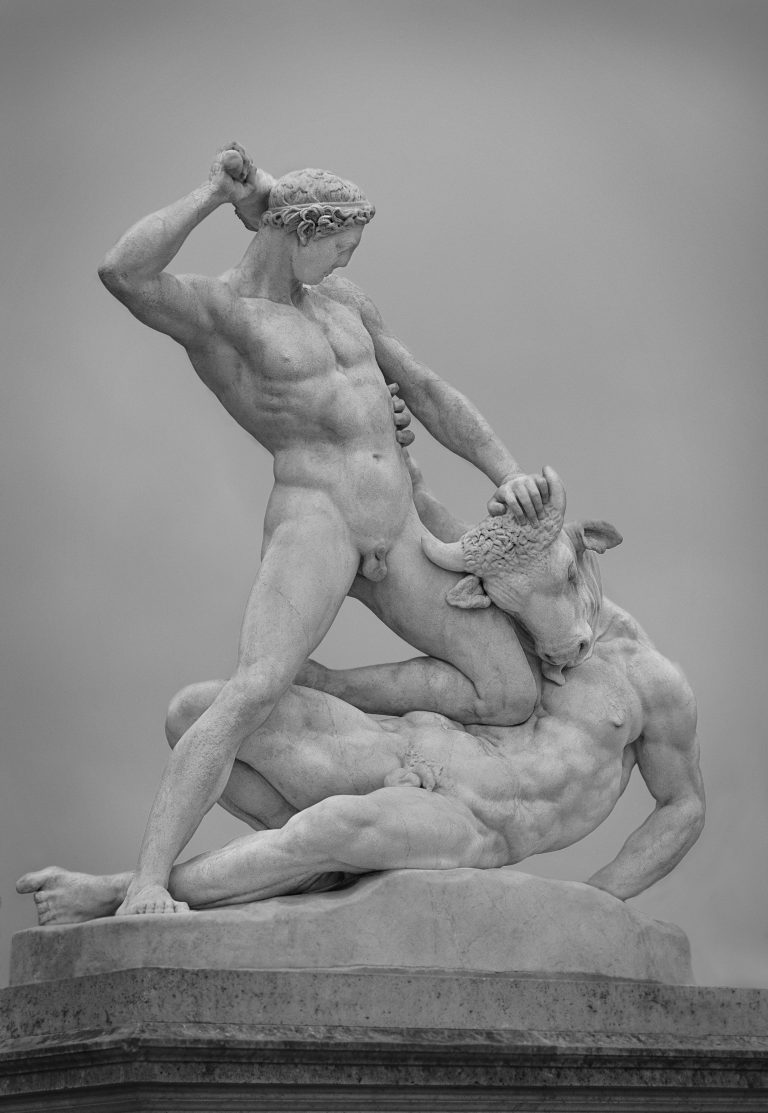
Comparing Theseus and Odysseus: Two Greek Heroes
Greek mythology is full of heroes, but two of them have come to stand for almost opposite ideas. Theseus walked into a labyrinth to face a monster at its centre. Odysseus spent ten years trying to find his way home from a war. Both are journeys. Both involve getting lost. But what each one is actually about could hardly be more different, and the contrast says something worth sitting with.
Odysseus: the journey back
Odysseus is the hero of Homer’s Odyssey, the King of Ithaca trying to return home after the Trojan War. His story is a nostos, a Greek word meaning homecoming, and it’s the root of the modern word nostalgia. That detail matters, because the entire epic is driven by a single desire: to get back. Not to discover something new, not to conquer, just to return to the wife, son, and kingdom he left behind.
The journey fights him the whole way. He’s away for twenty years in total, ten fighting at Troy, then ten more delayed by storms, monsters, temptation, and the anger of the gods. He faces the Cyclops, the Sirens, Circe, and Calypso. Every obstacle is, in a sense, the universe conspiring to keep him from home.
What defines Odysseus isn’t strength, it’s cunning. The Greeks called it metis, a kind of cleverness and resourcefulness. He’s the one who thinks his way out, who lies, disguises himself, and outwits what he can’t overpower. When the Cyclops asks his name, he answers “Nobody”, so that when the creature later cries for help, he claims nobody has hurt him.
But here’s the quiet complication in his story. Odysseus sometimes gets in his own way. He lingers a year with Circe, seven with Calypso. It’s worth asking, as you read, whether he’s entirely trying to get home, or whether some part of him is afraid of what he’ll find when he does.
Theseus: the journey in
Theseus goes the other direction, not away from danger and back toward safety, but deliberately into the thing everyone else avoids.
His most famous myth has him volunteer to enter the Labyrinth, a maze built so that no one who entered could reason their way out, to face the Minotaur waiting at its centre. Nobody forced him. Where Odysseus is pulled from home against his will, Theseus chooses to walk into the dark. His journey isn’t about returning to who he was. It’s about facing something and coming out the other side changed.
The thread Ariadne gives him is what makes the return possible, but notice how different its role is from Odysseus’s cunning. Odysseus survives by outwitting the world in front of him. Theseus survives by holding onto a line back to where he started. One hero relies on cleverness aimed outward, the other on a single fixed point that keeps him connected to himself while he goes deeper.
Two shapes of the same human problem
Put side by side, the two myths describe two things everyone recognises.
Odysseus is the struggle to get back to something you’ve lost, to return to a life, a person, a version of things that the years keep pulling you away from. His is a story about endurance, patience, and whether home is even the same place once you finally reach it.
Theseus is the struggle to go toward something difficult on purpose. To enter the maze rather than avoid it, face what’s at the centre, and trust you’ll find your way back out. His is a story about choosing the hard thing, and about what keeps you intact while you’re inside it.
Neither is more true than the other. Most lives contain both journeys, some seasons spent fighting to get back to where you were, others spent walking deliberately into something new and disorienting. The Greeks understood that, which is part of why both myths have lasted thousands of years.
Why it still matters
With Odysseus back in the cultural spotlight, it’s a good moment to remember the hero standing in the other direction. Theseus doesn’t spend his myth trying to return to safety. He walks into the labyrinth, holds his thread, and comes out changed but still himself.
That idea sits at the centre of everything we make. If it speaks to you, it’s the same thread running through the myth we build on and the shirt itself.